
- All
- Product Name
- Product Keyword
- Product Model
- Product Summary
- Product Description
- Multi Field Search
Views: 0 Author: Site Editor Publish Time: 2025-11-21 Origin: Site


How important is shrinkage rate when selecting shrink film? A wrong choice can lead to poor sealing, waste, and product damage. Shrinkage rate determines how well the film fits and functions.
In this article, we will dive into the concept of shrinkage rate, how to measure it, and how to choose the right film size. By the end, you’ll know how to optimize shrink film selection for both protection and efficiency.
Shrinkage rate refers to how much a shrink film contracts when exposed to heat. The measurement is essential to determine how the film will wrap the product. The formula used to calculate shrinkage rate is:
Shrinkage Rate = (L1 - L2) / L1 * 100%
Where L1 represents the initial length of the film before heat application, and L2 is the length of the film after it has been heated. Understanding this formula is fundamental, as it helps manufacturers gauge how much shrinkage is expected, ensuring that the film will fit perfectly without excess or shortfall.
Accurate shrinkage measurement aids in choosing the correct film for products with different shapes and sizes. If the film’s shrinkage rate is not properly accounted for, manufacturers risk underperforming packaging, which could lead to wasted material or insufficient coverage.
Shrinkage directly impacts the fit of the film around the product. A film that doesn’t shrink enough can result in gaps or wrinkles, which not only diminish the aesthetic quality of the packaging but may also compromise the protective qualities of the film. On the other hand, excessive shrinkage may cause the film to tear, which can lead to product damage.
Proper shrinkage ensures a tight, secure wrap, minimizing air exposure and environmental damage to the product. The right level of shrinkage also contributes to a visually appealing package, enhancing product presentation on shelves. Shrink films that shrink in a controlled and uniform manner help maintain product integrity while creating a smooth and attractive finish.
Shrinkage occurs in two main directions: longitudinal (along the length of the film) and transverse (across the width of the film).
Longitudinal shrinkage typically happens along the film’s machine direction, which is often used for products with a consistent shape.
Transverse shrinkage happens across the width of the film and is crucial for products with varying shapes and sizes.
Some shrink films shrink uniformly in both directions, while others may exhibit more shrinkage in one direction. Polyolefin films, for example, often shrink uniformly in both directions, which is ideal for packaging a wide variety of products. On the other hand, PVC films might shrink more in the longitudinal direction, which could be beneficial in specific applications, such as for wrapping cylindrical objects.
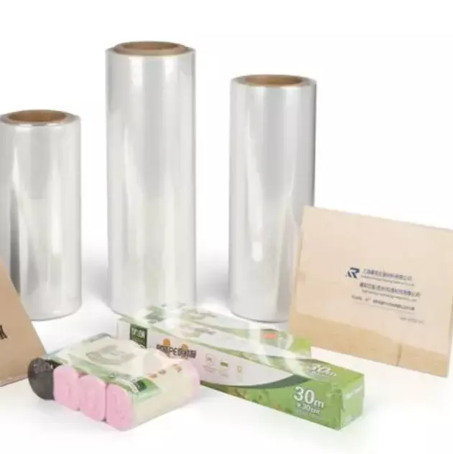
Several tools and methods are used to measure shrinkage, and they ensure that the shrink film will meet required standards.
Shrinkage Testers: These devices directly measure how much the film contracts after being heated.
Temperature-Controlled Systems: These systems let manufacturers test films at various temperatures to see how they behave under different conditions.
Shrinkage testing involves exposing the film to heat in a controlled environment and measuring how the film contracts. By doing this, manufacturers can understand the film’s behavior and determine its suitability for the packaging process.
There are several factors that influence shrinkage, including:
Material Composition: Films made of different materials, such as PET, PVC, or POF, will shrink at different rates.
Film Thickness: Thicker films tend to shrink less than thinner films, so the thickness must be accounted for when selecting the film.
Heating Methods: The method of applying heat (hot air, steam, or infrared radiation) can impact how evenly the film shrinks.
Considering all these factors is essential for accurate shrinkage measurement and ensures that the film will behave as expected during the packaging process.
| Factor | Description | Impact on Shrinkage |
|---|---|---|
| Material Composition | The type of plastic (e.g., PET, PVC, POF) | Different materials shrink at different rates |
| Film Thickness | Thickness of the shrink film | Thicker films shrink slower, affecting energy usage |
| Heating Methods | Hot air, steam, infrared, etc. | Varies by film type; affects uniformity of shrinkage |
| Temperature | The temperature at which the film is heated | Higher temperatures generally lead to higher shrinkage |
To guarantee consistent results, shrinkage tests often follow industry standards. These standards ensure the accuracy and reliability of measurements across different environments and manufacturers.
ASTM D955: This standard outlines how shrinkage should be measured in thermoplastics and provides guidelines for conducting these tests.
ISO 294-4: This standard helps manufacturers assess molding shrinkage in thermoplastic materials.
By adhering to these standards, manufacturers can ensure that their shrink films will provide the right amount of shrinkage and will fit products correctly, regardless of variations in material and film thickness.
Selecting the correct shrink film involves more than just considering the material and overall size of the product. One of the most important factors is the shrinkage rate, which must be carefully matched to the dimensions of the product to ensure the best fit. A shrink film with a 50% shrinkage rate is typically ideal for moderate shrinkage, providing enough contraction to form a tight, smooth fit around most products. However, this standard is not always sufficient for products with highly irregular shapes, extreme sizes, or non-uniform surfaces. In these cases, a higher shrinkage rate may be necessary to ensure that the film conforms tightly and uniformly to the product, avoiding gaps or loose wrapping.
The key to selecting the correct film lies in understanding how shrinkage behaves in different directions. Shrink films can shrink in both the longitudinal (machine direction) and transverse (cross direction) axes, and the shrinkage rate in each direction may vary depending on the film material and formulation. For products that have a complex shape or uneven surfaces, it is essential to select a shrink film that can handle both longitudinal and transverse shrinkage. This ensures that the film does not shrink excessively in one direction while failing to shrink enough in the other, which could lead to improper fit and undesirable packaging results.
For example, if a product has sharp angles or an uneven surface, you might need a shrink film with higher transverse shrinkage to ensure that the film tightly wraps around all contours of the product. Conversely, for more uniformly shaped products, focusing on a film with balanced shrinkage in both directions will achieve a cleaner and more consistent result.
Film thickness plays a critical role in both the shrinkage rate and the overall performance of the packaging process. Thicker films, while offering more durability and protection, tend to shrink more slowly and may require higher temperatures or longer heating times to achieve the desired shrinkage.
Thin Films: These are generally faster to shrink, which makes them a more cost-effective option for high-speed packaging lines. However, thin films may lack the necessary strength and durability to properly protect heavier or more fragile products. Items with sharp edges, such as glass bottles or electronics, may require thicker films to ensure they are securely protected during transport and handling. Thin films may also tear or puncture more easily, which can compromise product safety, particularly for sharp-edged or delicate items.
Thicker Films: Thicker films provide greater protection and strength, especially for heavy, sharp, or fragile products. These films also offer more resistance to punctures and tears, which is important for items that may undergo rough handling or transit. However, thicker films often require more energy to shrink, as they need higher temperatures and longer exposure to heat to achieve the same degree of shrinkage as thinner films. This can increase both the operational costs and time needed to complete the packaging process.
Therefore, the balance between thickness and shrinkage rate is crucial. Too thick of a film could result in excessive energy consumption and slower production times, while too thin of a film might not provide enough protection. The goal is to find a film thickness that offers sufficient strength without sacrificing shrinkage performance or increasing operational costs unnecessarily. Manufacturers should consider factors such as product weight, fragility, and handling conditions when determining the ideal film thickness.
For guidance on selecting the correct size of heat shrink tubing, see this comprehensive selection guide.
| Film Thickness (mil) | Shrinkage Rate (%) | Suitable Products | Advantages | Disadvantages |
|---|---|---|---|---|
| 1-2 mil | 10-20% | Light-duty packaging | Cost-effective, fast shrinkage | Less durable, low protection |
| 3-4 mil | 15-30% | Medium-duty packaging | More durable, moderate shrinkage | Slower shrinkage, higher cost |
| 5-6 mil | 20-40% | Heavy-duty and fragile items | High protection, robust | Slower shrinkage, higher cost |
The type of packaging machinery used in the production line is another crucial factor that directly impacts the selection of shrink film. Different machines have varying requirements regarding film thickness, shrinkage properties, and temperature tolerance, so it is essential to select a shrink film that works well with the specific equipment being used.
Manual Sealers: These are often used in small-scale or custom packaging operations. Manual sealers are more flexible and can work with films that have less consistent shrinkage rates and thickness. Because manual sealing machines typically require more operator involvement, they offer greater flexibility in film selection, allowing businesses to experiment with different film types for various products. However, the process is generally slower and less consistent than automatic systems, making it more suited for lower-volume packaging runs or customized packaging solutions.
Automatic Machines: On the other hand, automatic shrink wrapping machines require films that have more uniform shrinkage properties and consistent thickness. These machines are designed for higher-volume production and need films that can maintain their characteristics throughout the packaging process. For automatic machines, films with consistent shrinkage and thickness help to ensure smooth operation, minimize downtime, and prevent jams. High-quality films that perform consistently reduce the risk of machine malfunctions and inefficiencies, which helps improve overall productivity.
Collaborating closely with packaging machinery manufacturers is essential to ensure that the shrink film chosen will perform effectively with the machine's specifications. Packaging machine manufacturers often provide guidance on the types of films that will work best with their equipment. This collaboration can help minimize downtime, improve throughput, and reduce the likelihood of defective packages. Additionally, investing in films that are optimized for the machinery can lead to a smoother production process, less film waste, and a more professional final product.
In conclusion, understanding the relationship between shrinkage rate, film thickness, and packaging equipment is critical to selecting the ideal shrink film for any product. Balancing these factors while considering product dimensions, handling needs, and equipment capabilities ensures that the packaging process will be efficient, cost-effective, and capable of delivering high-quality results.

Polyethylene (PE): Known for its low shrinkage rates, PE films are often used for larger products that do not require tight wrapping. It offers an excellent moisture barrier, which makes it suitable for food packaging and industrial applications.
Polyolefin (POF): This film is ideal for smaller products that require a tighter fit. POF films shrink uniformly in both directions and offer better flexibility compared to PE, making them more suitable for various consumer goods.
PVC Films: These are commonly used for applications that require a glossy, high-clarity finish. PVC films typically show high shrinkage in the longitudinal direction and are ideal for packaging cylindrical items.
PET Films: PET shrink films provide superior strength and durability, offering robust protection for fragile items. They are also known for their high clarity, making them a premium choice for products where presentation is key.
When selecting shrink films, manufacturers should consider:
Shape and Size: Irregularly shaped products often require films with higher transverse shrinkage, while uniform items may only need longitudinal shrinkage.
Temperature Sensitivity: Some products may be sensitive to high temperatures. In such cases, choosing films that shrink at lower temperatures can help protect delicate items.
| Film Type | Longitudinal Shrinkage (%) | Transverse Shrinkage (%) | Ideal Application |
|---|---|---|---|
| Polyethylene (PE) | 10-30% | 10-20% | Large, uniform products |
| Polyolefin (POF) | 25-50% | 25-40% | Small to medium products |
| PVC | 20-40% | 5-15% | Cylindrical, clear wrapping |
| PET | 15-25% | 15-25% | Premium products, fragile |
Thicker films tend to provide better protection but come with a higher cost. The decision to use thicker films depends on the value of the product being packaged and the level of protection required.
Thin Films: More affordable but may lack the strength needed for heavy or fragile items.
Thicker Films: Offer enhanced protection but increase material and energy costs.
Evaluating the trade-off between protection and cost will help businesses make the best decision for their packaging needs.
Recent advances in shrink film technology, such as multi-layer co-extruded films, allow manufacturers to achieve better performance at lower gauges. These films offer high shrinkage rates without sacrificing durability, making them a cost-effective option for packaging.
Sustainability is becoming a top priority for businesses, and many are opting for shrink films made from recycled materials or those that use downgauging to reduce material usage without compromising strength. By using thinner films, manufacturers can lower material waste while still providing excellent product protection. As consumer demand for eco-friendly products rises, adopting sustainable packaging solutions can provide a competitive edge.
Choosing the right shrink film involves understanding the shrinkage rate and selecting a film that aligns with both the product and packaging equipment. By carefully measuring and considering factors such as material composition, thickness, and shrinkage direction, manufacturers can optimize their packaging process, improve efficiency, and reduce costs. Yu Long Packing Co.,Ltd. offers a wide range of shrink films designed to meet various packaging needs. Their products provide durability and performance, helping businesses improve efficiency and reduce operational costs.
A: Shrinkage rate refers to the percentage by which a shrink film contracts when exposed to heat. It is crucial for ensuring the film fits correctly around a product.
A: Shrinkage rate is calculated using the formula: (L1 - L2) / L1 * 100%, where L1 is the original length and L2 is the length after heating.
A: The Shrinkage Rate ensures the film will fit tightly and uniformly around the product, preventing issues like gaps or wrinkles.
A: A higher Shrinkage Rate may require more energy and time for heating, potentially increasing costs. Proper measurement ensures efficiency and reduces waste.
A: Material composition, film thickness, and heating method all impact the Shrinkage Rate, affecting the final fit and appearance of the packaging.


